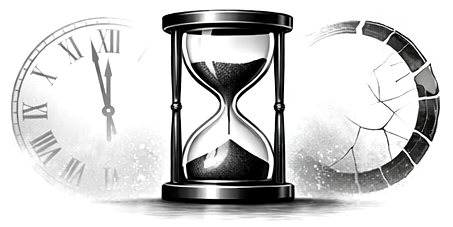
The future has excellent branding. It promises upgrades. Version 2.0 of you.
Better habits, better timing, better circumstances, better hair.
The future is where discipline conveniently lives, where courage finally shows up, where focus magically stops being optional. The future is amazing—mostly because it never has to deliver.
We use it the way teenagers use later.
Later I’ll study.
Later I’ll save.
Later I’ll tell the truth.
Later I’ll start.
Later is the most overqualified excuse in human history. It sounds responsible. It sounds thoughtful. It even sounds ambitious. But it’s still avoidance wearing a blazer.
The problem isn’t thinking about the future.
The problem is outsourcing your agency to it.
We treat the future like a trustworthy employee who will handle things once conditions improve. Spoiler: it doesn’t show up. It never has. It never will.
Because the future doesn’t do work.
The present does.
Remove the future as a hiding place and everything gets uncomfortable fast. There’s nowhere to defer accountability. No timeline to stretch. No imaginary “when things settle down” clause. Just now. Just you. Just the exposed truth that whatever isn’t happening today probably isn’t happening at all.
That’s the terrifying part.
The freeing part comes next.
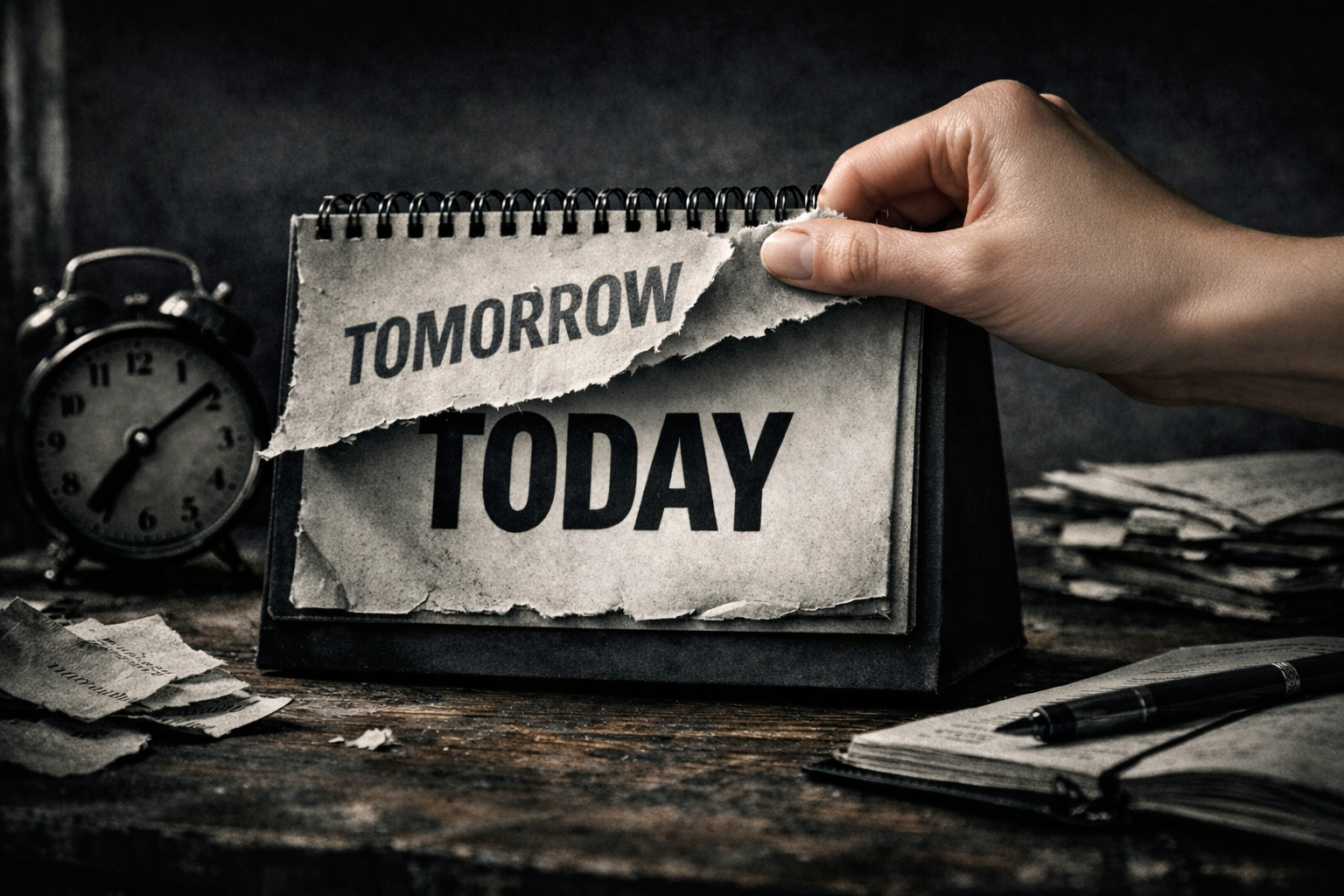
Once you stop treating the future like a warehouse where effort gets stored, something snaps into focus. You realize there is only one moment that responds to pressure—and it’s not tomorrow. Tomorrow is rude. Tomorrow ignores you. Tomorrow reads your plans and shrugs.
Today, on the other hand, reacts immediately.
Push it, and it pushes back.
Invest in it, and it compounds.
Ignore it, and it invoices you later with interest.
Today is brutally honest.
And oddly generous.
The present doesn’t care about your identity story. It doesn’t care what you meant to do or how busy you were or how unfair last week felt. It only responds to behavior. Clean inputs, clean outputs. Messy inputs, predictable chaos.
That’s why people who live in the future feel stuck, and people who live in the present look lucky. They’re not lucky. They’re just dealing with reality instead of negotiating with fantasy.
Most anxiety is future‑based.
Productivity—the real kind, not the color‑coded theater—lives in the present.
So does courage.
So does honesty.
So does progress.
None of these things take reservations.
This shift is brutal because it strips away comforting illusions. You can no longer say, “I’ll get serious when…” without hearing how hollow it sounds. You start noticing how often “planning” is just procrastination with better vocabulary. You catch yourself mistaking motion for movement, intention for execution, optimism for effort.


It’s not a fun mirror.
But it’s a useful one.
Because the moment you stop appealing to the future, you start reclaiming leverage. Your actions get smaller, sharper, more decisive. You stop asking existential questions and start making operational ones.
Not What do I want my life to look like?
but What does this next hour require?
Not How do I become disciplined?
but What gets cut today?
This is where power lives—in boring, unglamorous, repeatable decisions that aren’t Instagrammable and won’t impress anyone at dinner. Momentum isn’t born from breakthroughs. It’s born from quiet compliance with reality.
The future loves ambition.
The present respects execution.
And here’s the quiet scandal: you don’t become confident before you act. You act, and then confidence shows up late, pretending it was there the whole time. Same with clarity. Same with motivation. They are consequences, not prerequisites.
We wait for internal alignment like it’s a weather condition. But action is what creates alignment, not the other way around. The present doesn’t reward readiness. It rewards movement.
Eliminating the future as a psychological refuge feels like standing naked in front of your own potential. No buffer. No delay. No emotional escrow account. Just the raw exchange: effort for outcome. Attention for progress.
Uncomfortable—but clean.
Live this way and life gets narrower and sharper. You stop carrying the weight of imagined tomorrows and start lifting only what’s in front of you. The load gets lighter even as the work gets harder. You feel less busy and more effective. Less hopeful—and strangely more optimistic.
Because optimism grounded in action beats hope grounded in fantasy every time.
So yes, it’s terrifying to realize the future won’t save you.
But it’s also the moment everything changes.
You stop negotiating with time and start cooperating with it.
You stop postponing your life and start inhabiting it.
And that’s the real freedom—
not the freedom to delay,
but the freedom to decide.
Now.

Leave a Reply